
How Exchange Rates and Provider Markups Work
Markets publish a mid-market, or interbank, rate that sits between the bid and ask prices used by professional counterparties. “We believe the mid-market rate is the ‘real’ exchange rate, as it’s the midpoint between the buy and sell rates on global currency markets,” a customer-facing explanation from a major international payments firm states. Retail customers rarely receive that raw rate; banks and brokers typically apply a margin or spread.
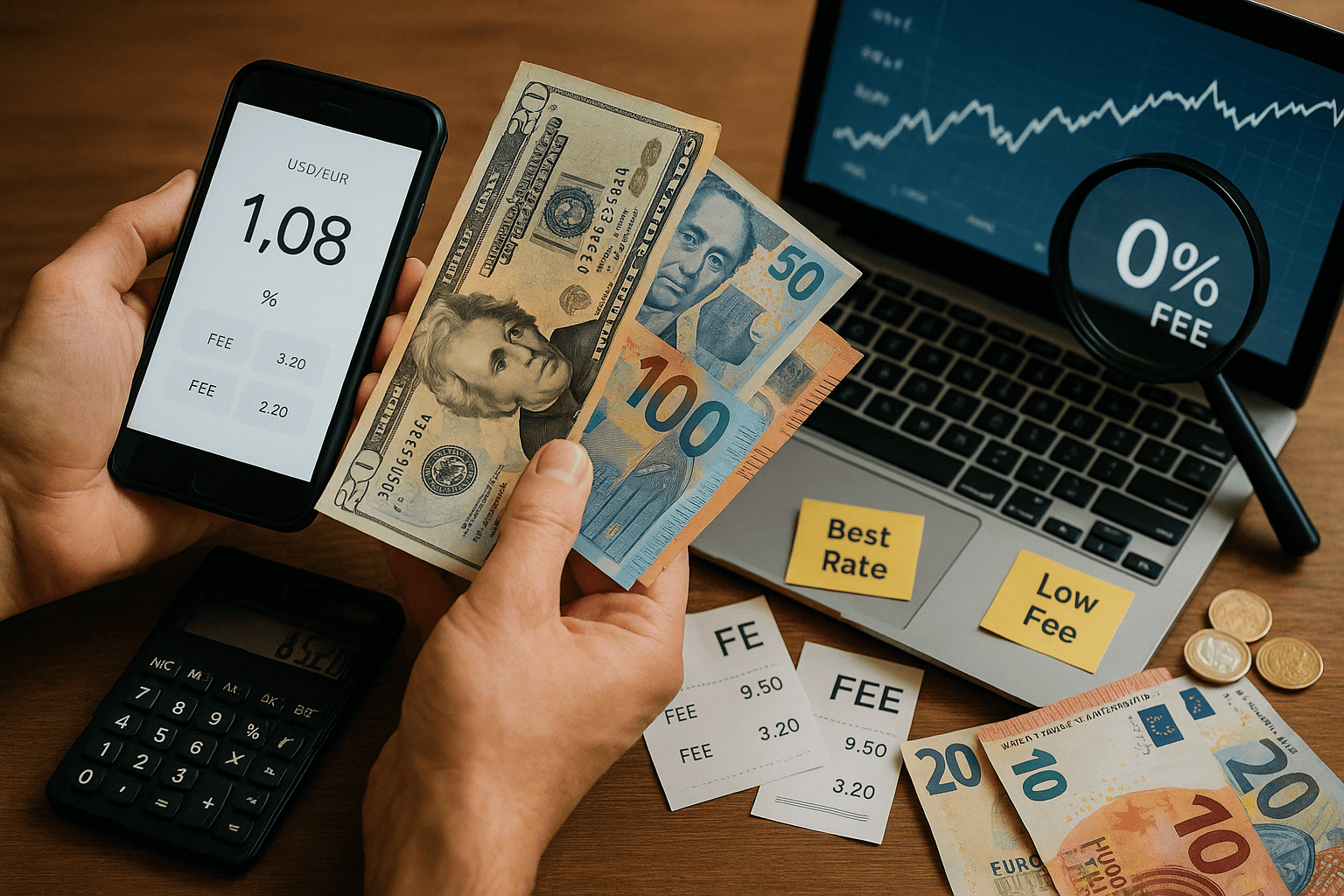
Industry audits and practitioner guides estimate the typical bank markup at roughly 2–3 percentage points above the mid-market figure for retail card conversions and wire transfers; independent guides warn that the markup is a primary driver of hidden cost. That markup, added to merchant and ATM operator fees, is the main reason travelers should compare providers rather than accept default conversion.
Card networks and merchant acquirers also generate volume-based fees that influence pricing across the ecosystem. A widely reported legal filing described annual fees generated by card processing reaching tens of billions of dollars in recent years; one account placed the industry total at $72 billion for 2023. That scale helps explain why interchange and network fees remain a factor in the retail exchange equation.
Options: Cash, Cards, Prepaid, and Bank Transfers
Each travel money option presents a different fee profile. A systematic review shows:
- Cash: Immediate liquidity and universal acceptance, but the worst exchange rates at airports and currency booths; fixed-commission exchanges and wide spreads make cash expensive if bought on short notice. Consumer guides warn that treating travel money as an afterthought “can cost them £100s.” See MoneySavingExpert’s guide: The cheapest ways to get travel money.
- Debit and credit cards: For many travelers, cards combine convenience with competitive exchange rates when the issuer does not add a foreign transaction fee. Specialist travel cards aim to offer near-mid-market rates; consumer guidance describes travel-focused cards as “one of the cheapest ways to spend” abroad. Card acceptance depends on destination and merchant type.
- Prepaid travel cards and multi-currency accounts: These lock a purchased rate ahead of spending, which can be beneficial in volatile markets. Fees may include loading charges and inactivity costs; firms position these products as transparent alternatives to traditional banking.
- ATM withdrawals: ATMs often levy operator surcharges on top of bank fees; third-party guides list typical ATM levies in many jurisdictions and show per-withdrawal charges that vary widely by country and operator. Travelers who withdraw small sums repeatedly risk paying proportionally high fees.
- International bank transfers: For sending larger sums, specialist payment platforms typically undercut traditional banks on both fixed fees and exchange-rate margins. Comparison studies and provider disclosures show that dedicated FX platforms commonly offer more of the mid-market rate than legacy banks.
Practical Tactics to Reduce Cost
A focused set of behaviors reduces total outlays without sacrificing security.
1. Use plastic that does not charge a foreign transaction fee
Travel-focused debit and credit products remove the typical 2–3% non-domestic surcharge that many high-street cards add. Travelers should confirm issuer policy before leaving home and carry a backup card from a different network.
2. Decline Dynamic Currency Conversion (DCC)
At checkout or at ATMs, merchants sometimes offer to charge the customer in the card’s home currency. That service, DCC, embeds an unfriendly conversion rate and a markup. If a terminal offers a local-currency option, the cardholder should select it; the card’s issuer usually supplies a superior conversion. Consumer reporting and guidance (see The Guardian) recommend always choosing the local currency when asked.
3. Apply a mixed liquidity strategy
Carrying a limited amount of local cash reduces the need for small, frequent ATM withdrawals. The rest of everyday spend should flow through a fee-free or low-fee card. For longer trips, a preloaded multi-currency account can hedge exchange risk for planned spending. This “cash plus card” approach balances acceptance, security, and cost.
4. Compare ATM and withdrawal rules in advance
Some fintech cards waive small withdrawal fees up to a monthly threshold; others charge a percentage above that amount. Where ATM operator surcharges are common, consolidate withdrawals into larger amounts while remaining mindful of safety. Guides that compare specific card rules help users choose the best travel card for the intended pattern of withdrawals.
5. For transfers and larger sums, use specialist FX providers
Legacy banks frequently include a hidden spread and fixed fees that make them costly for international transfers. Dedicated providers publish mid-market-adjacent rates and explicit fee schedules. For cross-border payments above routine vacation spending, comparison tools and fee tables deliver better outcomes.
Risk and Security Considerations
“Take money abroad safely” requires planning for card loss, fraud, and local scams. Recommendations include:
- Register travel dates with card issuers and enable SMS or app alerts for transactions.
- Memorize emergency numbers for each issuer and carry a separate contact list.
- Keep some value in a locked travel card or multi-currency account that can be frozen remotely.
- Use ATMs in bank lobbies under lighted conditions when possible.
Data-Driven Trade-Offs
Regulatory changes and market structure shape the underlying economics. The European Commission’s interventions in card fee caps and related reporting illustrate that interchange costs move across the system and affect both merchants and consumers; see the European Commission press release on interchange fee caps: Commission welcomes EP vote to cap interchange fees. Network-level fees and merchant surcharges can alter the value proposition of cash versus cards by market. Visa’s analysis of travel payments shows that card use remains dominant for many consumers, but cash retains importance in particular segments and jurisdictions: How travel trends are reshaping global payments.
At the household level, central bank reporting captures usage patterns. The Federal Reserve reported that 81 percent of adults had a credit card in 2024, highlighting the prevalence of plastic as a payment mechanism for many travelers: Report on the Economic Well-Being of U.S. Households in 2024. For those who prefer cash, central bank and consumer surveys show steady demand for notes as a payment option in several markets.
Step-by-Step Checklist Before Departure
- Select at least one card with no foreign-transaction fee and one backup from an alternate network.
- Order a small amount of local currency in advance at a reputable provider for arrival expenses.
- Load a multi-currency or travel account if planning to lock-in a rate for major purchases or long trips.
- Note issuer contact numbers and enable transaction alerts.
- Check ATM fees and local cash norms for the destination; plan withdrawal frequency accordingly.
Final Considerations
The arithmetic of travel spending is simple: small percentage differences compound across transactions. Choosing products that give close-to-mid-market rates and avoiding duplicate fees can return meaningful savings. Travelers should balance convenience with cost, holding modest cash reserves while relying on fee-aware cards for daily use and specialized providers for transfers or large sums. The best ways to take money abroad combine transparent pricing, awareness of dynamic currency conversion, and a layered approach to liquidity that reduces exposure to hidden markups. This framework helps users choose travel money option combinations suited to their itinerary, risk tolerance, and frequency of travel.